

The Developer’s Dashboard: Tracking Progress When You Can’t See the Finish Line
Imagine driving at night with no dashboard. No speedometer. No fuel gauge. No check-engine light. That’s what building a game feels like for most indies. You’re moving, but you have no idea if you’re making progress or about to break down.
The questions stack up quietly at first. Am I making progress? Is this any good? Should I be worried that I don’t know the answers? For solo developers, doubt isn’t an occasional visitor; it’s a permanent resident. The doubt creeps in quietly, then all at once. And because there’s no publisher demanding updates, no producer tracking milestones, the only voice answering those questions is the anxious one in your head.
What if you could replace that anxious voice with actual data? Not the kind publishers care about after launch; retention, LTV, daily active users but the kind that matters during the long, uncertain journey of actually building the thing.
Here are four categories of KPIs that can help you see what’s really happening with your project, your quality, and most importantly yourself.
Pillar 1: Progress Velocity (The “Are We There Yet?” Metric)
The biggest lie in game development is “I’m almost done.” The second biggest is “I worked all week, so I must have made progress.”
Activity isn’t the same as advancement. You can spin your wheels for months and feel exhausted without ever moving the needle. These metrics help you separate motion from momentum.
Shippable Features Completed
Count what’s actually finished. Not “coded but needs testing.” Not “designed but not integrated.” Done-done. Polished, tested, and working in a build. If this number hasn’t grown in two weeks, you’re not progressing; you’re polishing a sinking ship.
Weekly Active Development Hours
This is your “Energized Work” – the focused, flow-state hours I’ve written about previously. Hours spent on tasks that directly move the core forward. Not email. Not tool research. Not reorganizing your Trello board for the fifth time. Just focused, productive work. If this number is consistently low, the problem isn’t the game; it’s your workflow.
Feature Creep Index
Track how many new ideas you add each week versus how many you cut. If the “added” column is always bigger than the “cut” column, you’re not building a game; you’re curating a museum of unfinished concepts. Shipping means saying no.
Pillar 2: Quality Signal (The “Is It Any Good?” Metric)
Here’s a hard truth: your opinion of your own game is almost worthless. You’re too close to it. You’ve stared at every pixel for hundreds of hours. You can’t tell if it’s fun anymore.
You need external signals. Even one data point is better than none.
Playtester Smile Rate
Forget surveys and feedback forms. Just watch someone play your game for the first time. Do they smile? Do they lean forward? Do they say “oh that’s cool” unprompted? That’s your data. One honest reaction is worth a thousand of your own assumptions.
Critical Bug Density
How many game-breaking bugs appear per hour of gameplay? If this number is climbing as you add features, you’re building on a shaky foundation. Stop adding. Start stabilizing.
Tutorial Completion Rate
If you have a tutorial, do people actually finish it? Watch where they drop off. That moment of frustration isn’t a bug; it’s a map showing you exactly where your game loses people.
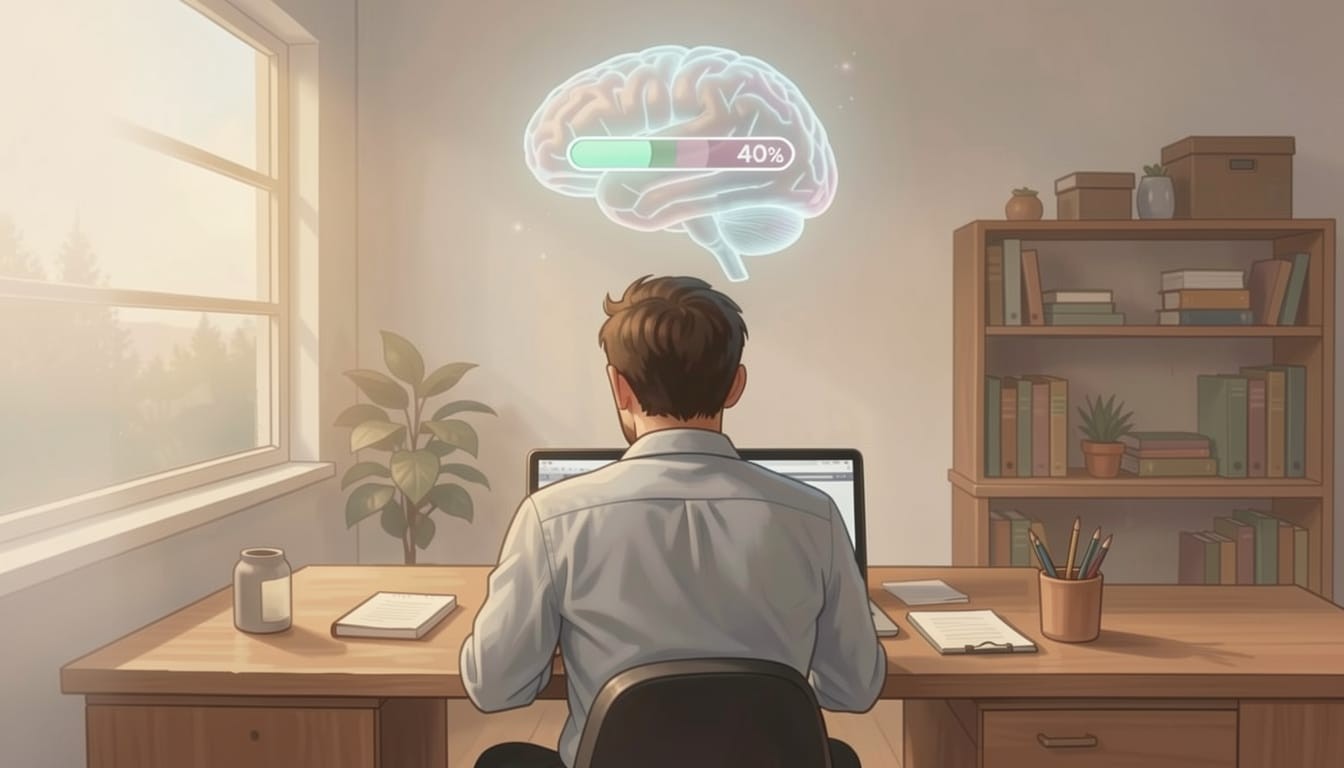
Pillar 3: Cognitive Load (The “Is the Team Okay?” Metric)
This is the one nobody talks about, and it’s the most important.
You can have perfect velocity and glowing playtester feedback, but if you’re running on empty, you will crash before you ship. I’ve seen it happen. I’ve lived it.
Deep Work Score
How many hours of uninterrupted, high-focus work did you get this week? Not “at the computer” time. Not “responding to messages while compiling” time. Genuine, flow-state hours. If that number is consistently under two, you’re not developing; you’re context-switching yourself to death.
Context Switch Count
Every time you stop coding to check email, every time you tab over to Twitter, every time you answer a “quick question” – that’s a context switch. Each one costs you roughly 20 minutes to get back into flow. Count them. You might be horrified.
Recovery Ratio
Hours of genuine rest versus hours worked. If this ratio is out of balance, you’re accumulating cognitive debt. And cognitive debt, unlike technical debt, cannot be refactored. It can only be repaid with time, rest, and distance from the screen.
Here’s the reframe: tracking these isn’t about being “productive.” It’s about being sustainable. A burned-out developer doesn’t ship great games. They don’t ship any games.
Pillar 4: Direction Confidence (The “Is This Still the Right Game?” Metric)
Scope creep doesn’t always look like adding features. Sometimes it looks like slowly, quietly drifting away from the original vision until you’re building something you never intended.
Vision Alignment Score
Keep your core promise – one sentence – pinned above your desk. Every Friday, ask: “Did this week’s work serve that sentence?” If the answer is no for three weeks in a row, you’ve drifted. Time to course-correct.
“Would I Play This?” Check
After each milestone, be brutally honest. If you weren’t the person making this game, would you want to play it? If the answer is anything less than “yes, absolutely,” something needs to change.
External Feedback Signal
Not “nice graphics” or “cool concept.” Look for the moments when a playtester says “wait, can I try that again?” or “I want to see what happens if I…” That’s the signal that your game has hooks. Chase that feeling.
Building Your Dashboard
You don’t need enterprise software for this. A spreadsheet works. A notebook works. The act of tracking is what matters since it replaces vague anxiety with concrete data.
Pick one metric from each pillar. Just one. Track it for a month. See what the data tells you.
You might discover you’re making more progress than you thought. You might realize you’re burning out faster than you admitted. Either way, you’ll be flying with instruments instead of guessing in the fog.
The Takeaway
The doubt you feel about your progress isn’t a character flaw. It’s a signal that you need better information.
Before you can ship a game, you need to see it clearly. And before you can see it clearly, you need to measure what actually matters – not just to publishers, but to the person doing the work.
What’s one metric you could start tracking this week?